

Hello Haven Travelers! Welcome to something new and exciting for the blog. I teased in our last edition of “Staff Picks” that I would be introducing new columns in the future, and here is the first of many to come. This column will be known as: “The Golden Rule.”
“The Golden Rule” is a column dedicated to both veterans of trading card games and complete newbies alike. When I started my journey at The Haven, I was really unaware of a lot of TCG (an abbreviation for trading card game) etiquette. I had no idea what “cutting the deck” meant, how tapping or untapping worked, or all of the basic tenets of any TCG standard play. I had longed for someone to show me the ropes, as I was simultaneously too ashamed to ask and too proud to admit I wasn’t proficient in the basics.
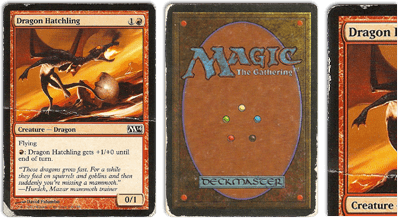
Card games are a double-edged sword (or, I guess, a two-headed dragon in this case), simultaneously fun and rewarding, but also a little inaccessible and challenging to those of you who might not know the essential form. Thankfully, I’m here to provide answers to all of your basic questions! All of those questions you might be too afraid to ask out loud at a prerelease are all fair game, and I wanted to start with our most popular game by far, Magic: The Gathering! We will be covering a bit of the background and history of the game, how it was made, and the core rules.
And yes, even you veterans out there might learn a thing or two about the history of these fine games. Some of the greatest parts of the games you play here at The Haven include their varied and complicated development cycles, and that couldn’t be truer than with M:TG. Without further ado, let’s dive into our first issue of “The Golden Rule!”
Early Beginnings
Magic started off originally as an answer to D&D, believe it or not. The creator and original designer of Magic, Richard Garfield, created board games and card games in response to the “dreadfully-written” aspects of OG D&D (hot take!). In 1993, the game was bought and distributed by Wizards of the Coast. It sold out almost immediately, and the original set (retroactively labeled as Alpha) was followed by a second beta-print run. The Beta-print run is a second, amended version of the original core set. This set would be followed by a rebranded Unlimited Edition print run, this time with white borders as opposed to black.
The game would quickly release expansions, featuring new cards to the game as opposed to reprinted cards from the original Alpha print-run. The original title of the game was simply Magic, but due to licensing issues, the subtitle was set as “The Gathering.” The original amended name of the game was Mana Clash, though most people knew the game as Magic, and the creative team wanted to keep “magic” in the title. The subtitle was originally supposed to change every set, with the second planned to be “Ice Age,” but this was quickly scrapped for consistency.
Core Rules
Magic itself is a game with a few very simple “core” rules that never change…unless stated otherwise. Magic supports a few different types of “formats,” each with different rules. We will simply gloss over the three most popular formats of the game and touch on the rules for the “Commander” format. Speaking of which, Commander is the most popular format of the game. A commander deck is made up of 100 cards (no repeats), one of which is a special “commander” creature/planeswalker (a term referring to a being that can essentially travel between dimensions, woowoo magical lore stuff) that rules the deck. The other two most popular formats are “standard” and “draft.” Standard decks are 60 cards, made from recently released sets. Draft decks are constructed from cracking open packs and letting fate decide!
Once you’ve decided on your format, you’re ready to play. Each player draws a hand of seven cards from their library (deck) and is allowed to take a mulligan (redrawing the cards and placing a card in their hand to the bottom of their library). The goal is to defeat your opponent, which can happen in a variety of ways. You can whittle their health down to zero, or have a card that changes the win condition in your favor.
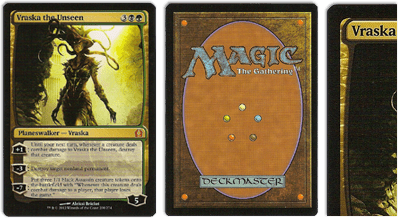
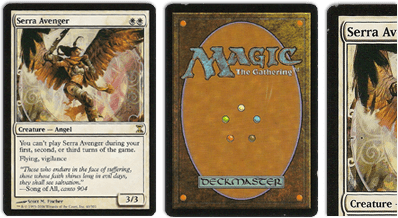
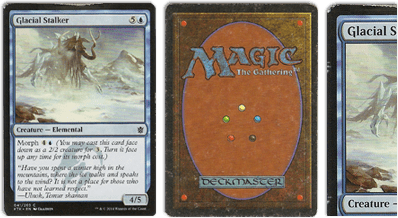
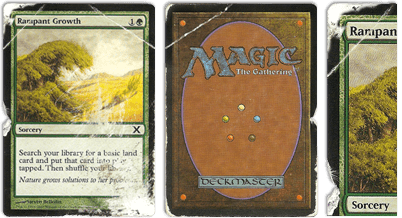
Cards are split into permanents and non-permanents, deciding whether or not they stay on the field after their effect is resolved. There are several types of cards: lands, creatures, artifacts and enchantments, sorceries, and instants. Lands are the main type of card that gives you mana, which you need to cast any spell in the game. You “tap” the land (activate the effect and turn the card on its side) and activate its mana wealth. Creatures are any living beings that can cause damage or other effects. Artifacts and enchantments are permanent upgrades to creatures or yourself that have positive effects. These would be your permanent card types. A sorcery is a spell you cast that has an instant effect and immediately goes to your “graveyard” (essentially a discard pile where you might be able to get cards back from with certain spells). Instants are cards you can cast at any point, even when it isn’t your turn, and these also go to the graveyard when their effect is resolved. These are the non-permanent card types.
These are the most bare-bones rules Magic has to offer. There are many ways you can make play more complex or simple, depending on your playstyle. Play continues in turns until one player is the victor!
Conclusion
That concludes our very first edition of “The Golden Rule.” I wanted to start this column for our little community because I feel like it’s important to bring in all walks of card game players. I’m still a novice at plenty of things we have in store, and I felt really afraid to ask questions because I didn’t know if I would be judged for not knowing. These games are super fun and are a great way to make friends, so learning how to play and being able to include yourself in the community is important to us here at The Haven. This is only the first installment in “The Golden Rule,” and we hope to eventually branch out into other games and even different strategies of play. Maybe we’ll even cover competitive play once we’ve mastered the basics.
For now, we thank you for reading. We’ll meet again soon, Haven travelers!
 '
' '
' '
' '
' '
'
2 comments
Wow! Makes me want to start playing again. Haven’t played since 1996 in Bosnia. The Army gave us a bunch of box of magic to keep us entertained. Great way of explaining the basics! Thanks!
I love this! I am one of these newbies that’s a bit intimidated so I really appreciate this simple breakdown. I’ve been wanting to check out the new Godzilla TCG. Just waiting for my new job to settle into a routine.